Sunday, November 25, 2012

New Zealand 2012 - Part 8: Exploring Queenstown

Part 1:  Asiana Airlines First Class – Los Angeles to Seoul
Part 2:  Asiana Airlines Business Class – Seoul to Sydney
Part 3:  Air New Zealand Economy Class – Sydney to Auckland to Christchurch
Part 4:  Winetasting in Waipara
Part 5:  Exploring Christchurch
Part 6:  Air New Zealand Economy Class – Christchurch to Queenstown
Part 7:  Winetasting in Otago
Part 8:  Exploring Queenstown
Part 9:  Hilton Queenstown
Part 10:  Overnight in Sydney
Part 11:  Singapore AirlinesFirst Class – Sydney to Singapore
Part 12:  Singapore Airlines First Class – Singapore to San Francisco


My excitement about Queenstown was piqued just from the views upon landing.  Although a bit overcast, the tall hills and blue lake stood out.  Plus, the view I had from my hotel was outstanding.  The Hilton Queenstown is located outside of the city proper in Kawaru Village.  Queenstown is known as the adventure capital of New Zealand and there are many opportunities to explore the surrounding environment or push your boundaries.  I was only able to scratch the surface while I was in town, although even when I come back I will still not go bungee jumping. 

The first morning in town I headed out along a path outside the hotel along the lake and around Kelvin Peninsula and Jack’s Point.  The path meandered along the million dollars homes of Kelvin Heights and along the shoreline of Lake Wakatipu providing great views of the mountains and communities.  The walk took about two and a half hours to do at a decent pace.  Once you reached the other side of the peninsula, the wind picked up and you could feel how much of a windbreak that outcropping provides for that part of the lake.  The far point of the trail goes through a golf course with signs posted “enter at your own risk” and they are needed.  I was almost hit by a golf ball due to a wild golfers shot.  Plus, I came away with a bit of a sunburn.


After the walk I wanted to head into Queenstown so I took the water taxi over from the hotel right into the harbor.  The city is nestled between the bay and surrounding hills with buildings no taller than four stories.  A gondola can take you up from the city to the top of one of the hills to a variety of trails, mountain bike paths, and other activities.  Round trip was $26 dollars but I think the views alone are worth it. 


At the top you can look out across the local part of the lake and see all of Queenstown below.  Breathtaking views.  One staff member noted that most of Queenstown does not get sun for at least a month in the winter because mountains block the low sun. 


You can do a variety of activities off the top of the mountain including bungee jumping / swinging, hang gliding, or the only one I would likely do, a luge track.  Another lift takes you to the top of the track where you get in little cars and gravity pulls you down the twisting course. 


Walking through the streets of the city you can get a feel of how quirky it is with shops catering to the youth hostels, high end clients, tourists, adventurists, foodies, and winos.  Plenty of opportunities to window-shop for local or mass produced items.  Architecturally Queenstown is a hodgepodge of styles with no clear cohesive design elements. 


On Saturday morning there was a craft fair in the park nest to the bay and the old dock buildings.  I walked around looking at the necklaces, yarn, pictures, carvings that were on sale but nothing interested me.  I did enjoy a nice cup of hot chocolate while people watching.  I did purchase a few items at the tourist shops though.


The docks also serve as a boarding point for the Earnslaw, an old steamship that cruises up and down the lake. 


There are a series of good restaurants in that same area and I went to an Italian place called LaVoglia Ristorante.  I enjoyed a glass of the Eradus Pinot Gris (NZ) which had a strong fruit finish.  I started with the minestrone with winter vegetables and it was tasty, a tad salty, but the veggies were sliced thin and like squares which was different.  The main course was a slow roasted lamb shank over vegetables and mascarpone polenta with a red currant reduction - very tasty.  And, dessert was panne cotta with berry compote and biscotti and a glass of port. 


I definitely want to return to Queenstown.  There are so many more sights in the surrounding area that I would love to see including the other lakes, Millford Sound, Doubtfull Sound, etc.  The weather was perfect too so many I will be back here next Thanksgiving!

New Zealand 2012 - Part 7: Wine Tasting in Otago

Part 1:  Asiana Airlines First Class – Los Angeles to Seoul
Part 2:  Asiana Airlines Business Class – Seoul to Sydney
Part 3:  Air New Zealand Economy Class – Sydney to Auckland to Christchurch
Part 4:  Winetasting in Waipara
Part 5:  Exploring Christchurch
Part 6:  Air New Zealand EconomyClass – Christchurch to Queenstown
Part 7:  Winetasting in Otago
Part 8:  Exploring Queenstown
Part 9:  Hilton Queenstown
Part 10:  Overnight in Sydney
Part 11:  Singapore AirlinesFirst Class – Sydney to Singapore
Part 12:  Singapore Airlines First Class – Singapore to San Francisco

My second full day in Queenstown included a wine tour of the Central Otago region.  I had initially booked the tour for my first day on viator.com and tried for the gourmet tour where they include cheese tasting as well.  Unfortunately, I was the only one who had booked it and so they asked if I would be willing to go on the regular wine tour instead the following day.  I had to take the bus into town in the morning (the water taxis didn’t start until noon) and meet up at a central location in town.  There were a total of nine of us on the tour – a couple from NYC on their honeymoon and 3 other kiwi couples. 


The driver and guide, Penny, was fantastic.  She was engaged, interested in learning about all of us, and provided great insight about the history of the Queenstown region while she was driving.  She also knew most of the owners or pourers at the wineries and was able to hop behind the counter and help out when they were busy.  Props to Penny and the complete opposite of what I experienced in Waipara. 


The Otago wine region is relatively young with the first vineyards planted in 1981 and the first wines bottled in 1987.  The region is roughly the same latitude as Burgundy and the Willamette Valley.   They don’t get as much heat as other regions in the north and thus focus on white wines and pinot noir.  Typically these wines are more acidic and minerality.  Central Otago has a number of microclimates throughout the valleys and river basins carved out by glaciers, each providing different flavor characteristics and challenges for healthy crops.  Frost is a major challenge in the area with the best vineyard planted along slopes above the river so the cold air falls down and is pushed out of the way.  About 20 miles inland is an area that stays about 5 degrees warmer in a more arid environment.  This are produces about 5% of NZ wine. 

The plan was to stop at four wineries, each being a 20 minute drive from the other and also have lunch at our second stop.  The first winery we visited was Peregrine.  Most of their wine is only available locally, but they also distribute in the US to Whole Foods under the “Mohua” label.  Be careful that you look for Otago on the label versus Marlborough.  They use the Marlborough grapes for their Sauvignon Blanc export because that is what the American palate expects from that wine.


The winery itself was settled along the base of the valley and the building was designed to mimic a birds wing in flight.  The winery won a couple design awards in New Zealand.  The wines we tried included:
  • 2008 Riesling – on the drier side with only 5 grams of residual sugar, strong citrus notes with a bit of granny smith apple, very acidic from beginning to finish. 
  • 2009 Rastasburn Riesling – less aromatic with higher residual sugar (15 grams), better balance of acidity and improved finish, had hints of caramel. 
  • 2011 Sauvignon Blanc (Otago grapes) – strong aroma of passion fruit and citrus which carries through the finish, mild acidity and a great finish, little to know grass quality I find in Marlborough Sauvignon Blancs.
  • 2012 Pinot Gris – very light aroma with a hint of citrus, very light color, good texture and finish but with much less flavor than previous wines.
  • 2010 Saddleback Pinot Noir (Exported to the US under Mohua label) – pleasant red fruit scents, light in color, hint of pepper on the finish which builds with additional tastes.
  • 2011 Peregrine Pinot Noir – 25% new oak, slightly darker ruby color with stronger currant aroma, much more pronounced fruit flavors and stronger acidic finish.  The grapes were from the Cromwell basin which provides more cherry and stone fruit flavors (They also grow lots of cherries there).

After a 20 minute drive through canyons and along the river, we arrived at our stop, Carrick, which was further east and in the Bannockburn area of Otago. 


The winery is certified organic which is a three year process in NZ.  They are situated on a hill overlooking and small inlet lake created by a local damn.  The winery had a great design and view, albeit the pours were stingy.  We only tasted four wines here:
  • 2012 Pinot Gris – light aroma, flavor, and color with hints of pear and apple, perfect amount of acid and good texture. 
  • 2011 Riesling – good balance of sweetness and acidity, 28g residual sugar, strong and pleasant lemon-line lingering finish. 
  • 2009 Chardonnay – 10 months in French oak (10% new), nice amount of cream on the palate and nose, but not a great aftertaste, medium acidity. 
  • 2010 Pinot Noir – more pepper than fruit on the nose, very pepper forward upon tasting but still a light quality to it, good finish and texture after the pepper disappears.

Lunch was served outside the winery with our table receiving several plates of tasting size morsels.  It was a surprisingly filling lunch although I had more than my fair share of the freshly baked bread. 


The third winery was in the Cromwell area, another 20 minute or so drive, called Aurum Wines. 


This winery is also certified organic and had a great small tasting room which was created out of an old house.  Plenty of plants and flowers along the walkways and surrounding the tasting room – and plenty of bees.  We tried 4 wines there including:
  • 2008 Riesling – strong lemon scent and taste with a bit of effervescence, not too sweet with 8 grams of residual sugar, very clear, medium acidity.
  • 2012 Pinot Gris – first time they’ve bottled pinot gris, 8 grams residual sugar, almost a pineapple lifesaver taste to it, very clear, bit of effervescence, good texture, long finish.
  • 2010 Pinot Noir – 18 months in oak, light ruby color, bit of fruit on the nose and a good balance between fruit and spice on the tongue, cherry notes.  They utilize whole bunch fermentation where they don’t pull the grapes apart or separate stems. 
  • 2011 Port Molyneux – white fortified pinot gris desert wine, 100 grams residual sugar, 16% ABV, great texture with hints of caramel, very clear wine, long finish. 

I was starting to feel like a bit of a lush at this point because everyone else in the group wasn’t finishing their tastings.  Instead they would just empty it into the spittoon – sacrilege!!!!  I got over than feeling quickly.  Our fourth and final winery on the tour was on our way back towards Queenstown, Mt Rosa Wines. 

 
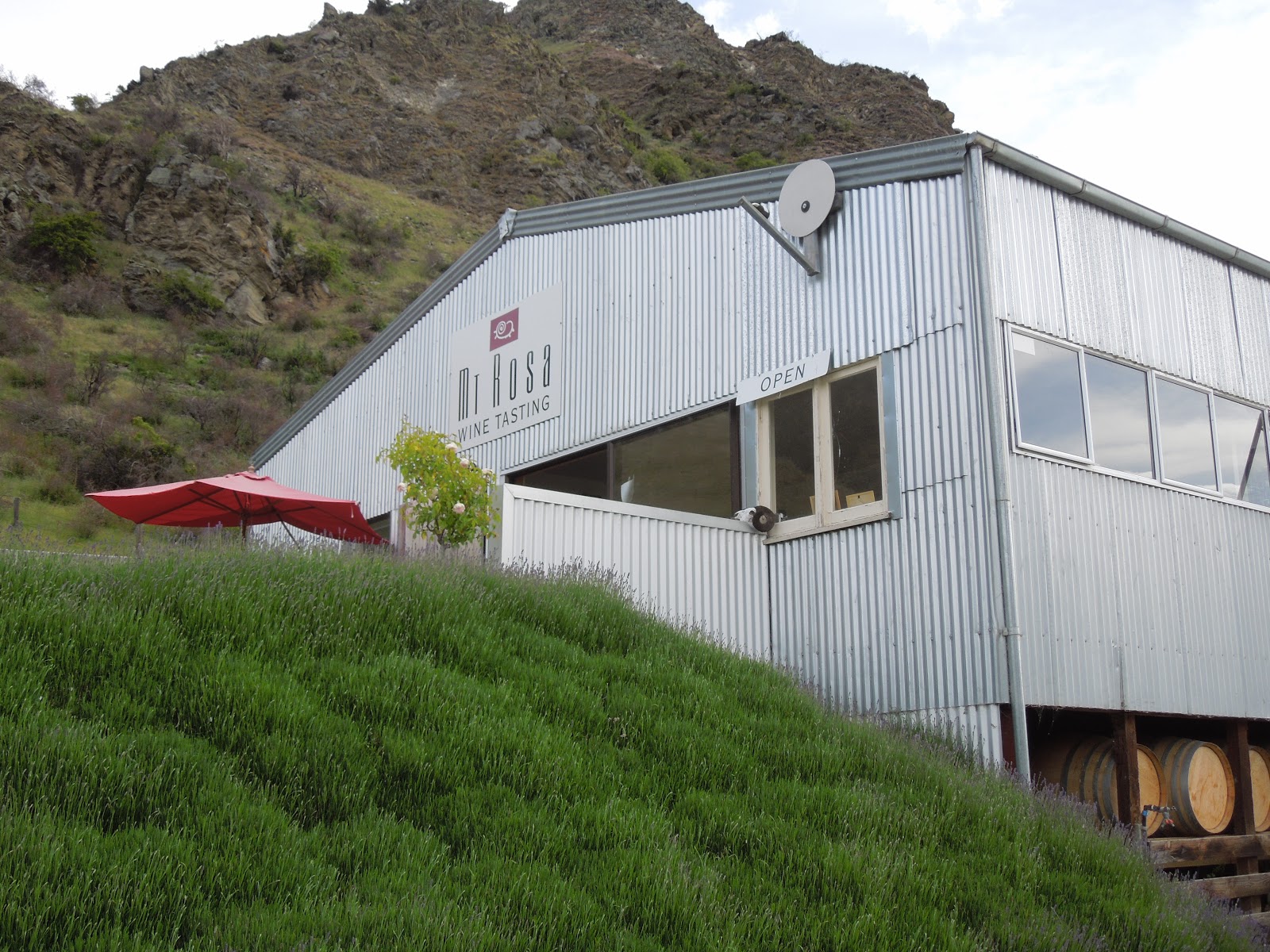
The winery is on the southeastern slop of the valley and owned by two families.  Luckily one of the owners was there pouring so we received healthy tastes and tried 11 wines including:
  • 2011 Sauvignon Blanc – strong lime scent and fruit flavor, very little grass, light color. 
  • 2011 Pinot Blanc – one of the few pinot blancs I have tried if any at all, genetic derivative of pinot gris, hints of cream on nose, notes of caramel and butterscotch due to barrel aging, great texture and limited acidity. 
  • 2009 Pinot Gris – more flavor developed than other pinot gris as they can leave grapes on longer in summer due to less heat, less sugar, more acid, nice citrus taste but quick finish and poor aftertaste.
  • 2010 Riesling – 69 grams residual sugar, very sweet and acidic, strong but reserved citrus taste, great texture and balanced tang on finish. 
  • 2011 Gewürztraminer – very light and refreshing, light color, minimal acid, great lingering finish. 
  • 2011 Rose – very dry to my palate, slight hint of fruit at start and then disappears at finish.
  • 2008 Pinot Noir – from their hottest year on record, strong cherry notes on nose and palate, slight effervescence, little to no spice.
  • 2009 Pinot Noir – from their coldest year on record, smaller grapes resulted in more tannins, much more spice and dark red fruits, great finish.
  • 2010 Pinot Noir Reserve – great finish with strong fruit flavors and perfect balance of spice at the end, texture lingers long on the palate, probably the best pinot noir I tried in NZ.
  • 2011 Late Harvest Riesling – notes of honey, light color, medium syrup texture, quick finish, good but no Sauternes.
  • 2011 Mulled Wine – their rose plus homemade syrup, 13% ABV, aroma was Christmas in a glass, strong cinnamon / spice nose, great finish and texture that coats the whole mouth, could be very dangerous. 

Mt Rosa also had a Great Dane that was wondering around the property and very friendly.  After snapping a few more photos it was time to get pack into the van and head into Christchurch.  20 minutes later I was dropped off “downtown” and headed out to enjoy a local dinner before my journey home started. 

New Zealand 2012 - Part 6: Getting to Queenstown

Part 1:  Asiana Airlines First Class – Los Angeles to Seoul
Part 2:  Asiana Airlines Business Class – Seoul to Sydney
Part 3:  Air New Zealand Economy Class – Sydney to Auckland to Christchurch
Part 4:  Winetasting in Waipara
Part 5:  Exploring Christchurch
Part 6:  Air New Zealand Economy Class – Christchurch to Queenstown
Part 7:  Winetasting in Otago
Part 8:  Exploring Queenstown
Part 9:  Hilton Queenstown
Part 10:  Overnight in Sydney
Part 11:  Singapore AirlinesFirst Class – Sydney to Singapore
Part 12:  Singapore Airlines First Class – Singapore to San Francisco

There are only two real ways to get from Christchurch to Queenstown – by road or by air.  A straight drive through would take 6 hours in a rental car and be pricey.  A couple bus routes exist including a scenic route which goes by Mount Cook and takes around 10 hours and a fair amount of cash.  The cheapest option, and quickest, was to fly on Air New Zealand using my miles.  It only cost me 12,500 for the one way flight. 

The walk from my hotel to the central Christchurch bus station took 20 minutes, then another 15 minutes before my bus arrives, and final 20 minute ride to the airport on the outskirts of town.  I arrived about 4 hours ahead of my flight due the early hotel check out time.  ANZ won’t let you check-in until 3 hours before a flight so I tried to first catch an early plane to ZQN but wasn’t able to.  Thankfully this was not a big issue as you don’t have to have a boarding pass to go through security and spend time waiting in the Koru (Air New Zealand) Lounge. 

Security was a breeze and I was in the lounge in a few minutes.  The lounge was crowded for all of the midday flights but they actually had a great spread of food and specific items for lunch including a hot quiche like dish.  I packed up my plate for lunch with the quiche, some cheeses and chutney, potato salad, cookies, and pasta.  I also had some Coke, a rarity for me. 


A little over an hour before my scheduled flight I headed out of the secure airport area back to the ticketing area and began the check-in process.  ANZ has great self-service stations arranged around columns which do everything from scanning your ID and printing boarding passes to checking bags and printing tags.  I had to check my roll aboard and all I had to do was attach a tag at the terminal and drop it off where a staff member scanned it, quicker and easier than in the states.  It was even quicker than just waiting to check-in at a United terminal at the airport. 

My flight was departing from the regional terminal.  This part of the airport had a very cool design with wood paneling and it also had no security screening.  Once the flight was called to board you just scanned your boarding pass and then walked out to the plane.


The flight would be operated on an ATR-72 propeller commuter plane.  We don’t have many of these in the US and you actually have to board from the rear.  The flight was completely full.  I stowed my backpack under the seat and got ready for takeoff.  This plane is loud.  I was near the engine, but still, it rattled your whole body as it was rolling down the runway.  Our direction was roughly southwest taking us over the plans around Christchurch and then the alpine mountains before heading into Queenstown.  We had some decent views of the snowcapped mountains and Mount Cook.  Free water, coffee, and tea were offered along with a small cookie for a snack. 


About 15 minutes prior to landing the pilots announced our decent.  Looking out the right side of the airplane I could see the Queenstown airport in the distance and the mountains on either side.  The plane turned right and we started descending into the valleys on our approach.  It was one of the most interesting and exhilarating landings I’ve done as we were buffeted by wind coming in.  Just as the mountains fell back we touched down on the runway and taxied to the gate.  The Queenstown airport is very small, even though it handles international flights.  There are no jet bridges so we exited out the back stairs onto the tarmac and into the airport.  Baggage claim was quick and then I was off to the waiting super shuttle to take me over to the Hilton Queenstown.  Even from just walking outside the airport I realized Queenstown is a very special place - and I love it.


Saturday, November 24, 2012

New Zealand 2012 - Part 5: Exploring Christchurch

Part 2:  Asiana Airlines Business Class – Seoul to Sydney
Part 3:  Air New Zealand Economy Class – Sydney to Auckland to Christchurch
Part 4:  Winetasting in Waipara
Part 5:  Exploring Christchurch
Part 6:  Air New Zealand EconomyClass – Christchurch to Queenstown
Part 7:  Winetasting in Otago
Part 8:  Exploring Queenstown
Part 9:  Hilton Queenstown
Part 10:  Overnight in Sydney
Part 11:  Singapore AirlinesFirst Class – Sydney to Singapore
Part 12:  Singapore Airlines First Class – Singapore to San Francisco


My time in Christchurch brought some incredible views of nature and architecture as well as plenty of sadness with the aftereffects of the February earthquake still being addressed throughout the City.  In researching a hotel for my stay, I could only find motels available.  All of the larger chain hotels were located in the central business district most damaged by the earthquake. 

I stayed at the Amross Court Motor Lodge – not my typical place to stay but the best I saw available.  There were maybe 16 rooms at this motel, each with a small kitchen area.  The room was very large compared to European or even most American standards.  I was on the side facing the street on the second level and could easily hear traffic even with the windows closed.  Free wifi was included and they gave me a bottle of milk when I checked in.  The hotel did have a cat named Cody.


I only had one full day in Christchurch including the wine tour I lined up so the morning after I arrived I walked through the city.  The first need of the day was breakfast and I found a nice little café and florist, Pepperberry, on the way were I was able to get a full breakfast which included “refried” potatoes.  The potatoes were not that good but the rest of the meal was great fuel for the day.


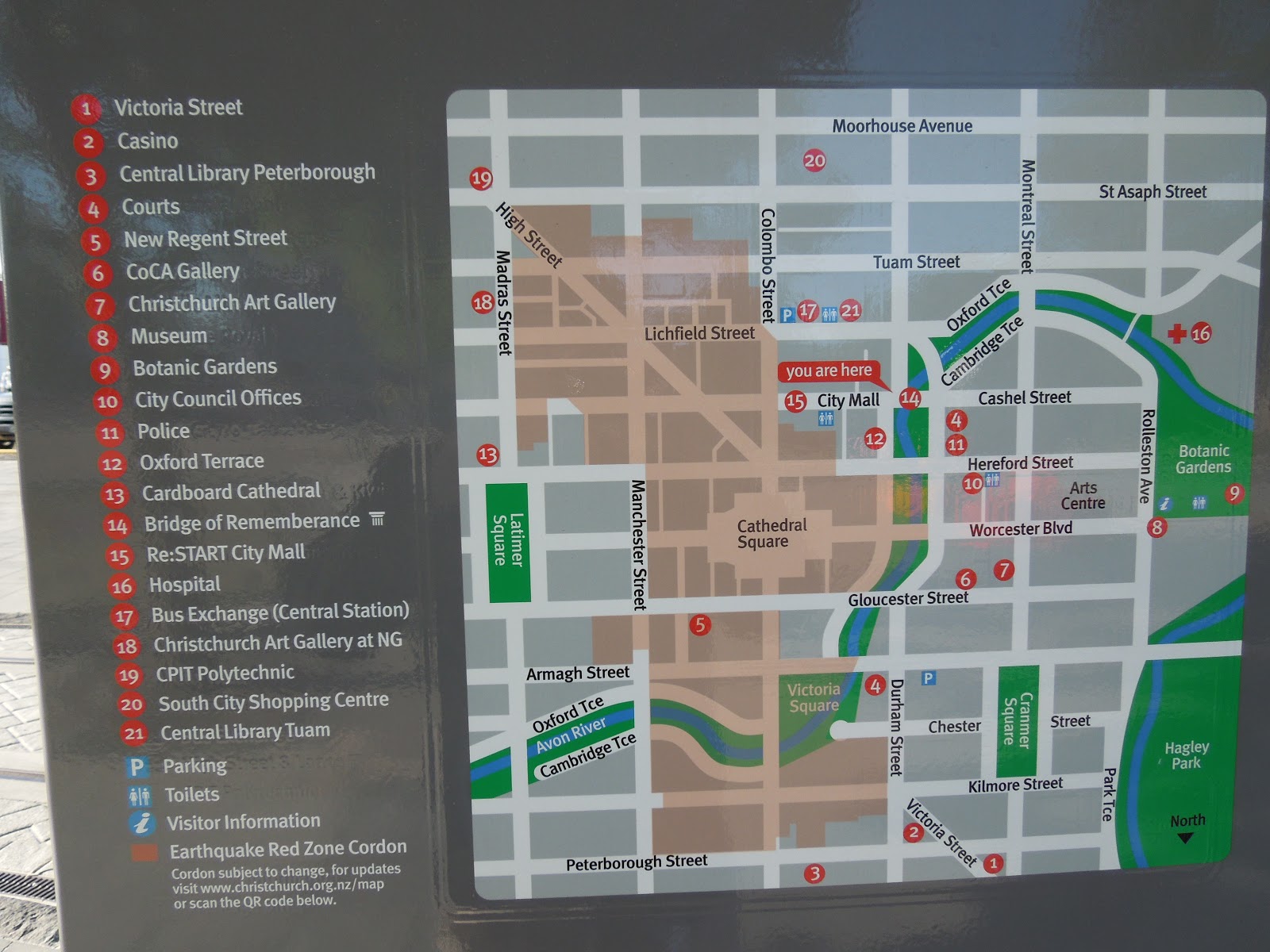
Walking south into the city there was building after building that was condemned, awaiting repair, or already torn down.  So many vacant lots were scattered along the streets I walked.  Some historic buildings suffered most and will require significant investment to repair, including the Christchurch Cathedral.  A large central portion of the city with many of the high rises, squares, and the Cathedral is off limits to people still due to all the work on going.  One person mentioned it may take 20 years for the city to return to where it was.


Some work has been done to start improving the environment including urban gap filler.  One vacant lot was turned into an outdoor dance floor with a proper floor platform and a washing machine sound station to plug in your MP3 player.  $2 gets you 30 minutes of amplified music.  A great idea to fill the space and replace lost indoor studios. 


A retail area called ReStart has also been built.  The stores and all of the necessary storage and mechanical systems were built out of metal shipping containers.  The spaces work extremely well for retail providing great storefront displays. 


The Avon River flows through the city center and there is a walking path following the river and into the large city park – Hagely Park.  A section of this park is home to the Botanical Gardens which showcase English planting sensibilities and native New Zealand plants.  The City Museum is also on the grounds by I didn’t have the opportunity to go inside.  The Botanical Gardens were great.  My walk through the area was extremely relaxing and rejuvenating as you could only here the nature and wind rustling through the trees and bushes.  After heading through the Gardens and park I returned to my hotel in time for the wine tour pick up.  


After I returned to my hotel from the wine tour, I headed to a pizzeria I saw a few blocks down called, Spagalimis.  The interior was nice and the menu seemed decent.  I ordered a Speight’s GMA and a cheese pizza.  My pizza arrived well before my beer did and the pizza didn’t taste much better than a frozen dinner.  The beer was passable, but on the lighter side for my tastes. 


The next morning I went down the street to Strawberry Fare for breakfast.  I had their French toast which was delicious.  Imagine bread that tasted like a cinnamon and sugar donut being used as the base and then a very light syrup on top.  It was surprisingly light and airy and didn’t weigh me down later.  The bacon and bananas were good too.  When breakfast was finished I had to head back to my hotel and pack. 


Friday, November 23, 2012

New Zealand 2012 - Part 4: Wine Tasting in Waipara

Part 1:  Asiana Airlines FirstClass – Los Angeles to Seoul
Part 2:  Asiana Airlines BusinessClass – Seoul to Sydney
Part 3:  Air New Zealand EconomyClass – Sydney to Auckland to Christchurch
Part 4:  Winetasting in Waipara
Part 5:  Exploring Christchurch
Part 6:  Air New Zealand EconomyClass – Christchurch to Queenstown
Part 7:  Winetasting in Otago
Part 8:  Exploring Queenstown
Part 9:  Hilton Queenstown
Part 10:  Overnight in Sydney
Part 11:  Singapore Airlines First Class – Sydney to Singapore
Part 12:  Singapore Airlines First Class – Singapore to San Francisco

The second day of my trip to Christchurch included a wine tour along the Waipara wine trail.  I found this tour through viator.com and when I checked in the morning before I was the only going and they were going to cancel it.  Thankfully, I received a fax at my hotel that additional people signed up and the tour would go through in the afternoon.  I had a great time, but it wasn’t as much of a guided tour through the wine country with insightful commentary along the way.  Instead it was just a paid driver who didn’t really share much at all about our itinerary.
I was picked up at my hotel by the tour bus just after Noon and joined a couple from New York City already seated.  On the way out of town, another couple from Washington State joined us as well.  The trip out to Waipara took about 40 minutes and we would be served lunch and wine at our first stop.  We lucked out because the weather that day turned out to be perfect. 


Waipara Springs winery looked promising as we arrived with a rusted metal corkscrew at the entrance and a nice exterior seating area outside the tasting room.  We were directed to sit down at a central table as they brought water over for us.  There were a couple groups of people having lunch and drinking when we arrived.  Lunch for our group consisted of a “flat plate” hodgepodge of a small salad, fried mushrooms, chicken wing, slices of cheese, olive tapenade or pepper chutney, deli slices, smoked salmon, sausage link, and fruit.  It was all over the map with some parts being tasty and others passable.  A very odd combination nonetheless. 


We were able to try seven different wines from two of their labels.  This winery was my least favorite of the four visited, and everyone else agreed as no one purchased anything.  The tastes included:

  • 2009 Waipara Springs Dry Riesling – not as dry as I would’ve expected given the description, but a clean finish and nice balance of fruit. 
  • 2011 Waipara Springs Riesling – much sweeter than the first Riesling with a slightly stronger citrus flavor yet a much clearer / nonexistent color.
  • 2012 Waipara Springs Sauvignon Blanc – not your typical New Zealand sauvignon blanc, contained a much more pronounced spice note verging on red pepper but the aroma carried the citrus element.
  • 2011 Waipara Springs Premo Chardonnay – their reserve brand aged in oak 10 months, high minerality, very smooth finish with more qualities of a sauvignon blanc than chardonnay to me.
  • 2009 Waipara Springs Blush – very light and dry with barely a hint of strawberries and peach, paired well with the pepper chutney.
  • 2010 Waipara Springs Premo Pinot Noir – very spicy for a pinot in my mind, strong finish and upfront red fruit and earth notes.
  • 2009 Waipara Downs Merlot – much less spice compared to the 2010 with rich plum coming through from nose to finish, my favorite out of all the ones tasted here.

After ten minutes of not knowing what we should do – was dessert included?  Do we try more wines?  Where do we go?  - our driver finally returned and escorted us back onto the van for the next destination. 

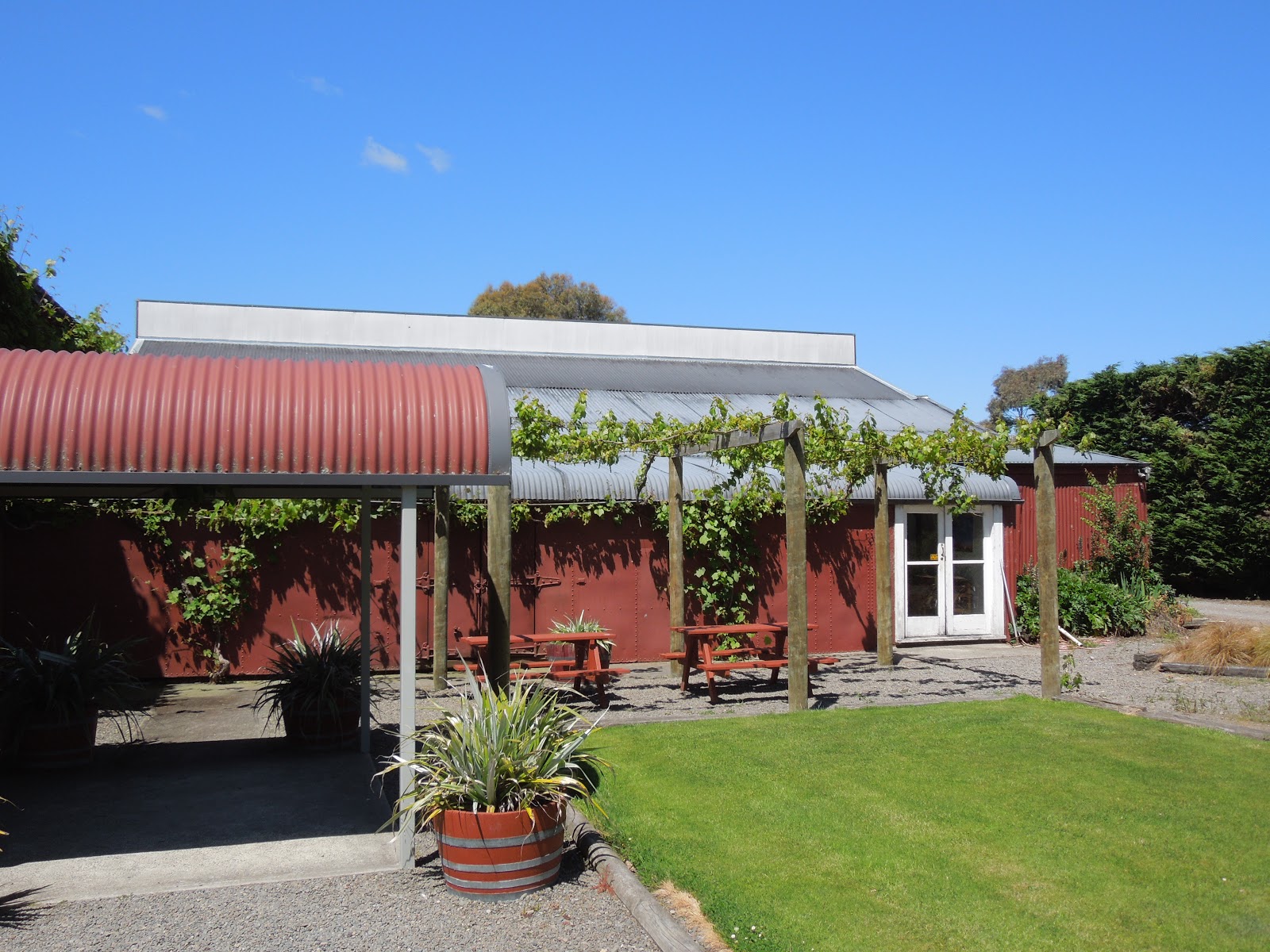
The second stop on the wine trail was the best out of the four.  Everyone in the group purchased a bottle or two from the winery.  Torlesse Wines, a smaller family run winery, let us taste pretty much everything on the list.  The winemakers son was our host.  He was polite and cordial and very laid back with our tastings. 


Several of the wines we tasted were my favorites of the day (we tried a total of 12 here).  I only wish they distributed their wines within the US.  We tried:

  • 2011 Sauvignon Blanc – an excellent sauvignon balancing out the right amount of citrus and grass with a smooth finish. 
  • 2011 Pinot Gris – surprisingly good (since I usually don’t like pinot gris) with a strong citrus and fruit note all the way through, great almost syrupy texture.
  • 2011 Gewürztraminer – just the right amount of fruit and sweetness with a crisp but long finish. 
  • 2010 Chardonnay – a buttery chardonnay with a strong finish and fair amount of acidity.
  • 2011 Rose – very light with noticeable fruit.
  • 2008 Late Harvest “Sticky” Riesling – do like that sweet dessert wines are called “stickies” down here, excellent dessert wine with a strong honey character and syrup texture. 
  • 2011 Pinot Noir – a light amount of fruit balanced well with the spice notes.
  • 2010 Omihi Pinot Noir – their reserve label which did translate into a better wine, better ratio of fruit over spice, linger red fruit finish.
  • 2010 Cabernet Sauvignon – spicy but smooth without the typically strength seen in CA cabs, bold aroma with a finish of red pepper on the tongue.
  • 2010 Port – hides the 18% ABV well with fruit /plum forward notes.
  • 2010 Creme de Cassis – my first time actually trying this black currant derived beverage reminding me almost of concentrate grape juice with a great finish and texture, very dangerous since it is also 18% ABV.

At this point our group of 5 realized that our preferences in wines were similar, especially since each of us purchased the same wine.  The others bought a few more things that I did though.  Our third stop was at The Mud House. 


This winery was back in the more corporate mode of wine making as they have vineyards in a couple wine regions in New Zealand.  The upside of this was that we could try two of the same wines but from the other regions to discern the differences.  We tried 10 wines including:

  • 2011Mud House Riesling – refreshing fruit with a strong finish and texture.
  • 2011 Equinox Riesling – higher sugar and fruit content than the previous wine which lingers perfectly on the palate.
  • 2011 Mud House Pinot Gris (Marlborough) – light and refreshing with a hint of grass like a sauvignon blanc.
  • 2011 Equinox Pinot Gris (Waipara) – less fruit on the tongue but a better overall wine due to a stronger and tastier finish.
  • 2011 Mud House Sauvignon Blanc (Marlborough) – typical New Zealand sauvignon blanc, very aroma forward, grassy.
  • 2011 Equinox Sauvignon Blanc (Waipara) – aged 10 months in oak creating a much more mellow wine, less aroma but more flavor on the palate, less grassy nature and improved texture.
  • 2010 Mud House Pinot Noir (Marlborough) – strong aroma, mellow taste with a hint of pepper, light & clean finish.
  • 2010 Mud House Pinot Noir (Otago) – much heavier wine with greater spice and stronger fruit, retains good finish.
  • 2011 Mud House Rose (Marlborough) – pinot noir grapes giving it a nice and fruit flavor, very refreshing on a warm day, slight bit of effervescence. 
  • Equinox Late Harvest Riesling – very light and simple, sweet and clean finish, not syrupy, more of an aperitif than dessert.

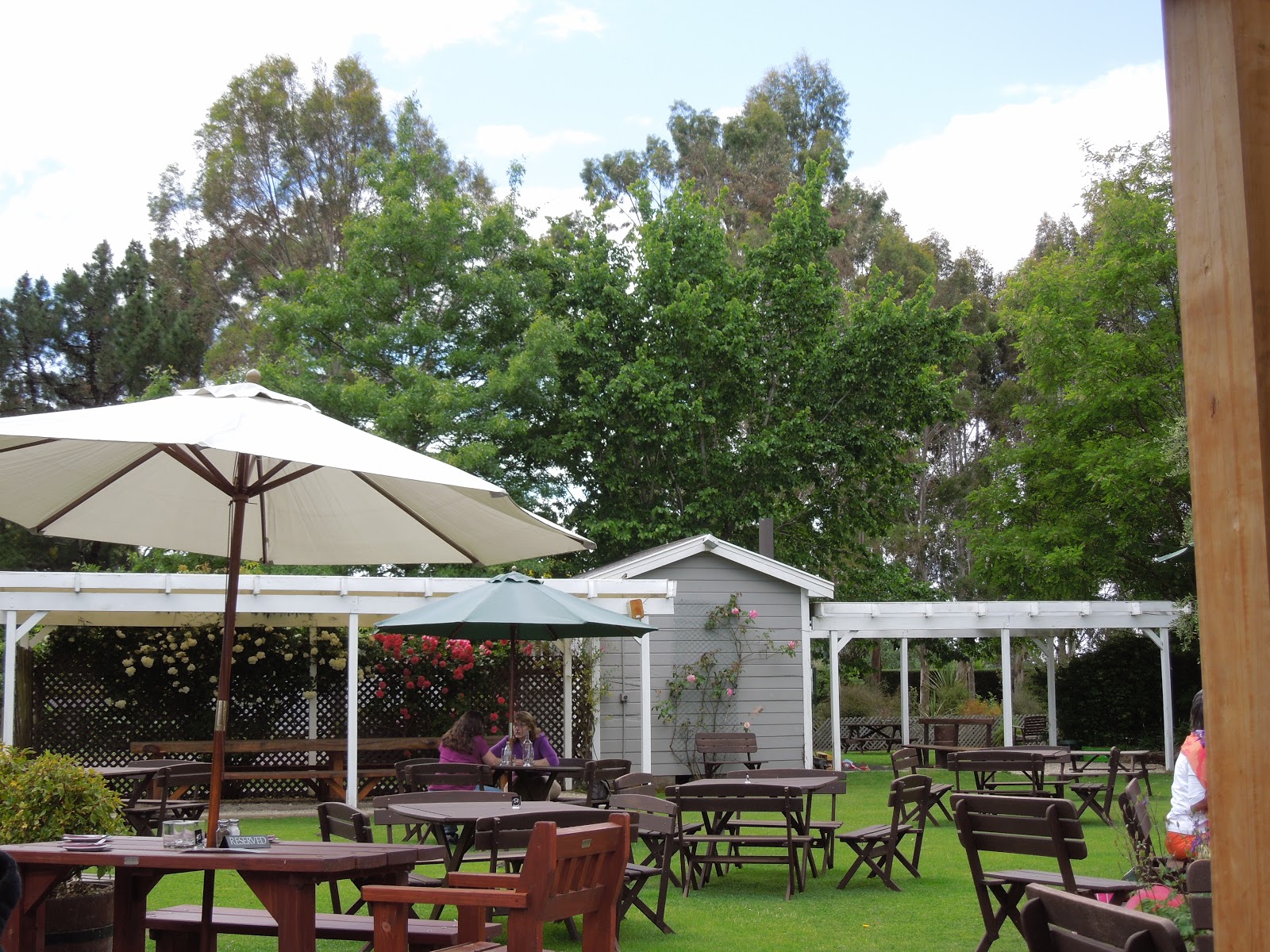
The final stop on our tour through Waipara was at Pegasus Bay.  This winery was on the best grounds out of the four with neatly kept gardens and lakes around the property. 


This winery was my second favorite of the trip.  We tried 8 wines including:

  • 2010 Sauvignon Blanc / Semillon – fruity and acidic but well balanced, you can taste the addition and weight of the Semillon against the sauvignon blanc.
  • 2009 Riesling – very sweet Riesling with a strong acidic nature to be paired with spicy foods.
  • 2010 Gewürztraminer – fruity wine with a bit of effervescence, dry finish.
  • 2009 Chardonnay – light aroma with a medium buttery body, good finish, a decent chardonnay for my taste since I am usually not a fan.
  • 2009 Pinot Noir – very good pinot with a limited amount of spice and strong fruit finish.
  • 2009 Cabernet Franc / Merlot – traditional Bordeaux blend with some cabernet franc included, light bouquet but complex taste.
  • 2009 Aria (Late Harvest Riesling) – very sweet with a medium syrup body and a touch of leather.
  • 2010 Finale (Noble Semillon) – Semillon grape with the botrytis fungus creating a very sweet and dense wine, very similar to Sauternes. 

After we tried the last wines, I was able to walk about the winery a bit and check out the grounds before the drive back to Christchurch. 


The return drive was relatively quick given I was in a good place after trying 37 wines.  I learned that I much prefer a Waipara Sauvignon Blanc to a Marlborough one even though I love those.  And, that I want to try and find a few distributors of New Zealand wine to try a few other regions.  At least I have another tour through Central Otago soon to try more wines.